Showing posts with label writing. Show all posts

Saturday, 8 October 2016

The 5 minute VIP lounge poem

Picture
I'll write everywhere and anywhere and so, as we left Bulgaria, sitting in the VIP lounge waiting for our flight, when I was handed the VIP book, I felt it was time for a little poem...

More to follow on Bulgaria!

Saturday, 27 August 2016

Another little success

I'm thrilled to be a part of this listing of 50 top travel blogs to follow

Great Travel Blogs Every Traveler Needs to Follow

http://www.artfulclub.com/top-travel-blogs/

Do check out these blogs, as I will be doing, and thanks to Frank Lee for including www.piarastrainge.com

Saturday, 2 July 2016

Coming soon to my website...

Yep, it's that time of year again where I see a holiday in my sights - and lots of lovely spare time - and I immediately get thinking about how I can improve my website!

So that will be a total redesign then hahaha! No, just kidding - I do have some new things to launch, but I'm not planning to revamp my whole layout.

Watch this space over the summer...

Thursday, 19 November 2015

Originality

Something to ponder on this Thursday morning...

It is better to fail in originality than to succeed in imitation. HERMAN MELVILLE

I've been watching a lot of detective shows recently and besides the great story lines and trying to figure out whodunnit, the one thing I've noticed is that all the leading Chief Inspectors stick their necks out to get to the heart of the murder case/s. They put themselves, their reputation, their life and their career on the line when they get a hunch. Most of the time they get away with it (of course, this is fictional television) and it leaves me with the feeling that to get anywhere, you need to be gutsy. You need to push the boundaries. Dare to go where no man or woman has gone before kind of stuff.

Don't be afraid to put yourself out there and try new things with your writing. Be a leader, not a follower.

Tuesday, 17 November 2015

Literary coffee

I really like this! Which coffee would you choose to kick start your day?

Picture

Thursday, 5 November 2015

The Boy Next Door

 Picture

I found this book up in my mum's loft. It's the first ever Enid Blyton story I read. After this one, I was hooked and it became my mission to read all of The Famous Five and The Secret Seven books. Whilst we were at school, my mum used to visit the local library for us and bring me home four at a time. Children were only allowed four pink tickets and we renewed our books or swapped for something else every couple of weeks.

Friday, 23 October 2015

Complication Neurosis

Following on from my post on Wednesday; the funny poem I wrote when I first started working at the Post Office, here's another amusing P O related post.

A regular customer of mine handed me a very funny book "Golden Oddlies" by Paul Jennings around the time of my second Christmas stint. As you can imagine, it was pretty manic, but the Chapter "Psychological Grading" gave me great cause for comfort - and chuckles.

"Golden Oddlies" is the best of Jennings "Oddly Enough" column that he wrote for the Observer. If you've ever worked in a Post Office, stood in a Post Office queue, or worked in Customer Service, you will relate to his musings...

PSYCHOLOGICAL GRADING

All British sociologists will welcome the Report of the Royal Commission for Psychological Grading in Busy Places, published this week for the Ministry of Development and Printing, for it represents the first real official attempt to cope with the problem in modern society of complication-neurosis.
This is a condition which can best be explained to the layman by actual examples. Let us imagine a suburban branch Post Office, with, say, six positions - Stamps, Savings, Money Orders, Position Closed, Pensions and Allowances, and Telegrams. An ordinary customer (in the sociologists' jargon, a neutral counter-unit, or N.C.U.) such as the reader or the writer of this article - a person, therefore, entirely free from complication-neurosis - goes in to buy a book of stamps. He is preceded in the queue by a complication-neurotic who, perhaps, wishes to send a parcel to the Virgin Isles, a possession of the U.S.A. The clerk looks dubious, then calls someone from an inner office with a glass door. They fetch down a big book - the Post Office Guide. They find the section on the Virgin Isles.
'Ah,' murmurs the First Clerk, 'Customs Declaration "A".'
They are not quite sure what this is, so they flip rather aimlessly through the pages until it occurs to Clerk Two to look up 'Customs' in the Index. They find it and Clerk One reads, in an unsure sort of voice, 'Two kinds of customs declaration form are in use, namely an adhesive form to be affixed to the parcel (mainly for Empire use), and a non-adhesive form (for most foreign countries). Two or more copies of the latter form may be required, see pp. 110-209.'
But pp. 110-209 are merely the alphabetical section covering the world's countries, containing the bit about the Virgin Isles where Clerk One started. We are in a vicious circle. But this is only the beginning. When they have finally decided about the Customs, Clerk Two says, 'What's in the parcel?'
'Well, it's a kind of model I made,' says the woman helplessly, 'and a few potatoes.'
'Potatoes, eh?' says Clerk One doubtfully. More page flicking, then, 'I'm afraid we can't accept it, ma'am.' For under 'Prohibited Articles' it says, for the Virgin Isles:

Letters, cotton seed, cotton and cotton seed products (except oil, manufactured cotton and cotton waste; see below); feathers and skins of wild birds (except ostrich feathers) unless for educational purposes; films or pictorial representations of prize fights; intoxicating liquors; potatoes...

And so on, while all the normal person or N.C.U. wants is this book of stamps. Not only Post Office are affected by the spread of complication-neurosis. Evidence submitted to the Commission shows that most of the people who want a simple second-class return to Birmingham in a hurry are preceded by the sort of man who wants to go on an obscure place in the Hebrides. He has voluminous inquiries about sailing tickets and seat places and insurance. His ticket, instead of being issued quickly with a metallic thump from a machine, has to be laboriously written out on a duplicate form with long footnotes about 'Messrs MacBrayne's Services'. In a bank, an N.C.U. who merely wishes to cash a cheque for £5, will be preceded by someone with a battered attache case full of little blue bags full of pennies and complicated company accounts.
The Commission's Report recommends a revolutionary technique of psychological grading, to be tried out experimentally at first in Post Offices.

We are in entire agreement with the experts who have given evidence (it says) that the present division of Post Offices into operational functions is arbitrary and inefficient. We therefore recommend a form of Psychological Grading. In a Six-Position Post Office two of the positions should be labelled 'SIMPLE'. The remaining four should be labelled 'COMPLICATED'. Counter units should be met at the door of the Post Office by a trained psychologist who by the answer given to some such question as 'Good morning sir (or madam); what do you require?' would be able to deduce the degree, if any, of complication-neurosis, and direct the counter-unit accordingly.

I need hardly point out the effect on our social life if the Report is acted upon. Normal people like the reader, or the writer, of this article will be able to pop quickly in and out of the Post Office, even at the busiest times. Complication-neurotics will have a special part of the Post Office all to themselves, screened off with trellis and artificial roses, there will be little tables where they can discuss their problems with fellow-spirits all day long over a cup of Post Office coffee.
The realignment of staff will mean an overall increase in Functionary Time (F.T.) without the corresponding increase in Functionary Units which sociologists previously thought this must involve. The Report, recognising the existing shortage of psychologists, outlines a scheme for Regional Training Colleges giving a special one-year course. In the Report's concluding words,

the initial expense should soon be repaid, since from Post Offices it is a short step to railway booking offices, banks, and shops. and we may therefore look forward confidently to an efficient rationalisation of the whole of our public life.

Sunday, 13 September 2015

Roald Dahl day

Celebrating one of the greatest Children's authors of all time, on what would have been his 99th birthday.

As a child, I devoured every book of Roald Dahl's that I could get my hands on, and these stories, coupled with Quentin Blake's illustrations, were magical.

Ten Tremendous Roald Dahl Facts

"I have a passion for teaching kids to become readers, to become comfortable with a book, not daunted. Books shouldn't be daunting, they should be funny, exciting and wonderful; and learning to be a reader gives a terrific advantage.”
― Roald Dahl, who was born on this day in 1916

How to draw Mr & Mrs Twit, by Quentin Blake

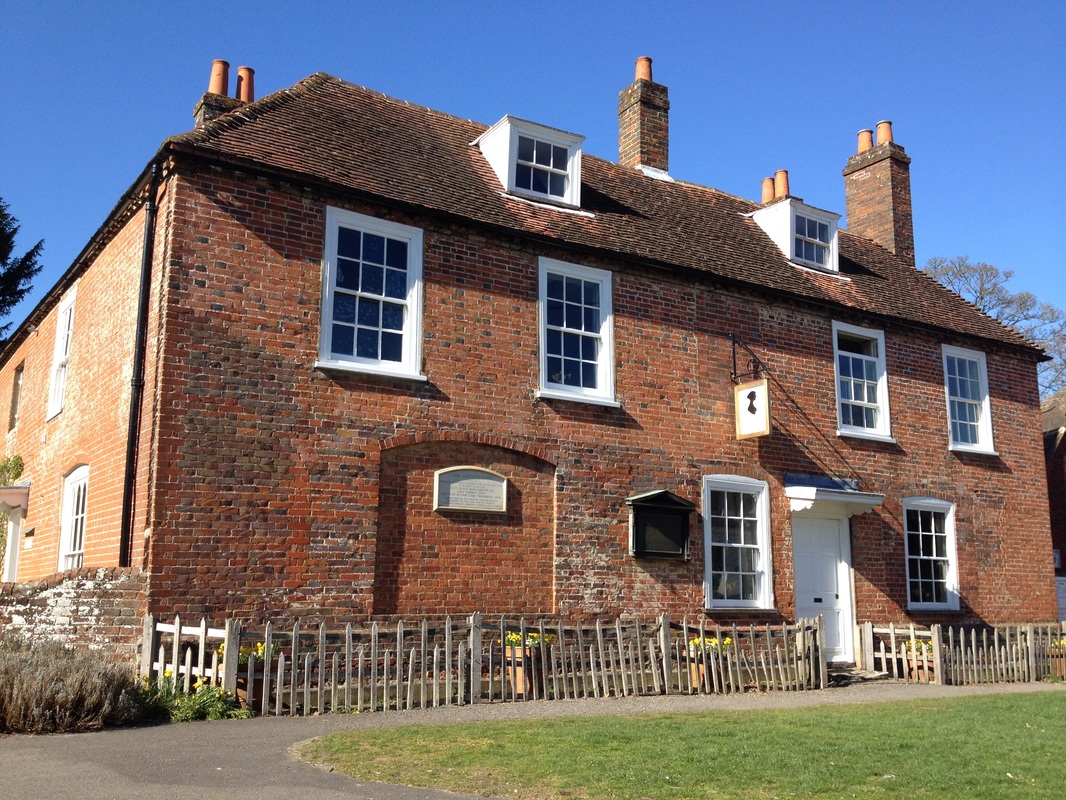
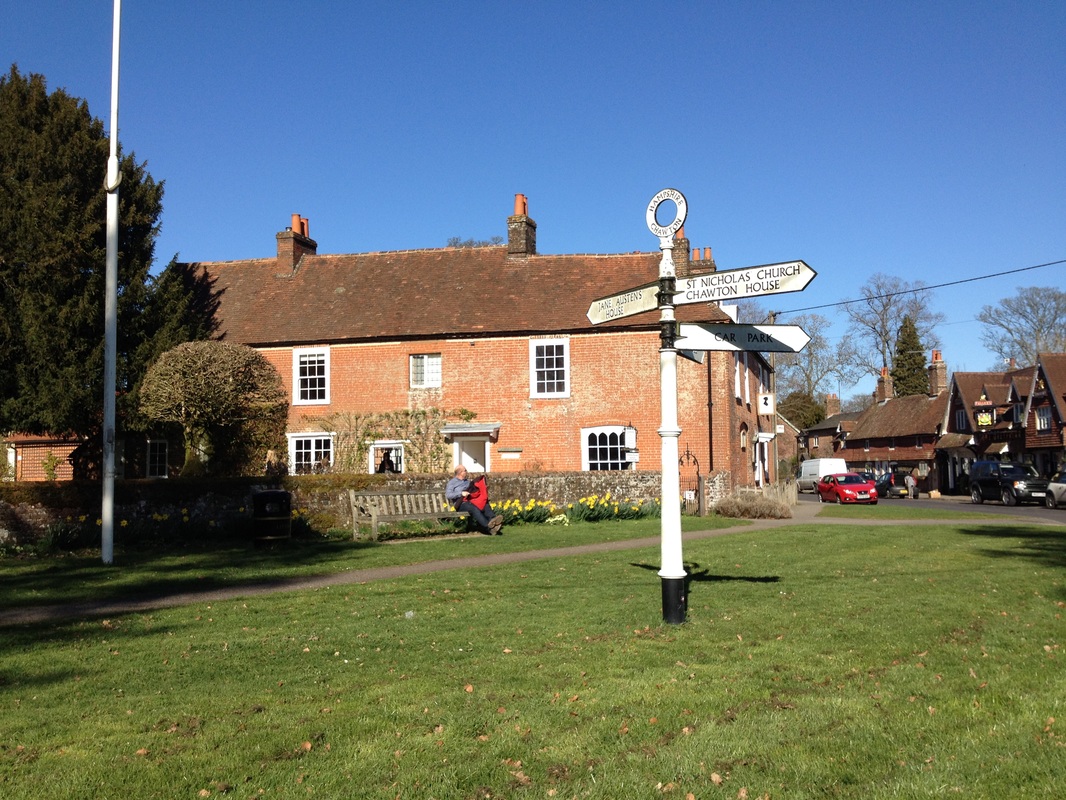
Becoming Jane


What to do on a rainy Sunday... I know, Netflix! Myself and my Aunty watched Becoming Jane with Anne Hathaway. This is the story of Jane Austen and, of course, I live in Jane Austen country - Hampshire, UK - and am a massive fan of her work. Last year I visited Chawton where her house still stands. 

Sunday, 6 September 2015

Don't Quit

This is a poem I found in my Aunty's house. The message is so relevant and I like the style. A lot of my poems are similar in set up. Author Unknown.

When things go wrong, as they sometimes will,
When the road you're trudging seems all uphill,
When the funds are low and the debts are high,
And you want to smile, but you have to sigh,
When care is pressing you down a bit -
Rest if you must, but don't you quit.

Life is queer with its twists and turns,
As every one of us sometimes learns,
And many a fellow turns about
When he might have won had he stuck it out.
Don't give up though the pace seems slow -
You may succeed with another blow.

Often the goal is nearer than
It seems to a faint and faltering man;
Often the struggler has given up
When he might have captured the victor's cup;
And he learned too late when the night came down,
How close he was to the golden crown.

Success is failure turned inside out -
The silver tint of the clouds of doubt,
And you never can tell how close you are,
It may be near when it seems afar;
So stick to the fight when you're hardest hit, -
It's when things seem worst that you mustn't quit.

Saturday, 6 June 2015

My ideal Writing Retreat in Copan

I didn't want to leave The Tea and Chocolate Place we visited in Copan - and not just because of the tea and chocolate temptations! It was also the perfect setting for my very own private writing retreat. I absolutely fell in love and it was a wrench to tear myself away. So peaceful and calm with beautiful gardens and views across the valley. 

Picture

Saturday, 27 December 2014

David Walliam's children's stories

"Mr Stink" has been sitting on my V+ box from Boxing Day 2012 and yesterday I finally decided to watch it. What prompted me was BBC was also showing "The Boy In The Dress" - another of David Walliam's children's stories adapted for television. I'd watched "Gangsta Granny" last Christmas and been impressed, only half realising it was Mr Walliam's creation, and all year I've been hearing lots of good things about his stories from the mum's coming into the post office. There have been comparisons with Roald Dahl and I love the fact he's working with the greatest illustrator Quentin Blake.

What I love and admire about great writers is that they take something very ordinary, find a way to bring it to life, tell a story with it and, most importantly, leave us with a message. They give their writing purpose.

Some people read a book to escape. Some people read for pleasure. Some, to better themselves. I read to find the hidden message - and yes, this is most probably because I'm a dreamer and want peace and love in the world. So, if I can find a little something to make the world a better place, I will search it out and use it.

"Gangsta Granny", "Mr Stink" and "The Boy In The Dress" are fantastic children's stories. I saw their appeal to children - but also I saw the bigger messages - reminders not to judge people by what you see on the surface, don't be scared to be different, make time for people in your life.

I remember reading everything of Roald Dahl's when I was younger and being moved, thrilled and delighted with the stories. I haven't read Walliam's books yet, but the TV adaptations left me with the same feelings of fulfillment.


Read more about "The Boy In The Dress" here.

Wednesday, 25 June 2014

Building blocks of poetry

I believe if you study something for long enough, it will ultimately help you to improve.

Having the ability to read a poem and to understand what the poet is saying between the lines, as well as the techniques used, is a good starting point for writing great poetry of your own.

So what are the building blocks of studying a poem?

1) Meaning - what is the poet communicating? Why does the poet use certain words and why those words and not others?

2) Look for allusions - why does the poet refer to certain things? What is the true meaning behind it?

3) Dictation and tone - what language is being used? Formal, classical, biblical, slang, popular... What is the tone of voice? Sarcastic, obnoxious, hypocritical, aggressive, grave, comical, enthusiastic, gentle, mocking, angry, optimistic... Try to "hear" the poem by reading it out loud.

4) Who is speaking and what is the situation? How many people are in the poem?

5) Grammar and syntax - if repetition is used, why is it there?

6) Figurative language gives a poem life - similes, metaphors, symbols, images, personifications - but also ask yourself why is it there and what meaning does it add to the poem.

7) Rhythm and rhyme can change the mood and feel of a poem creating abruptness and discord, or calmness through regularity.

Look out for my WordUp Wednesdays.

Wednesday, 21 May 2014

When writing is there to save you

There is a lot of advice out there about how to write around the day job and the other daily pressures of life, but what happens when unforeseen circumstances introduce themselves into the mix, like long-term illness, and you immediately find yourself involved?

I'm going through something along these lines at the moment and I can only describe it like this: one minute you're juggling all the little pebbles in life that make up everything you're used to, when all of a sudden you see a big boulder hurtling towards you. You manage to catch it but it keeps dragging you further and further away from what you know and love.

Everybody copes and manages in different ways and we each have varying levels of patience and tolerance. There are days when I envy the people without responsibility. I don't have any solutions to share, but I just wanted to connect with fellow writers going through something similar. This is the first time in almost a month I've been able to sit and write fresh material, freely and without any pressures to be at the surgery or the hospital or run to the pharmacy - and this, in itself, is a tonic.

Sunday, 18 May 2014

Being a travel writer

Here are some tips for making your travel content interesting and relevant. These don't really differ from any piece of writing you do. The principles are the same.


  • Target your feature to a specific market so you can tailor the content accordingly and write in the correct style and tone for the publication

  • Find a fresh angle

  • Write about what you know because that will make your piece credible

  • Answer these - What? Where? When? Why? How? Who?

  • Know what the point of your article is and emphasize this throughout

  • Write a great introduction

  • Keep the content tight - no flowery prose, no cliches, no unnecessary, complicated words, and show don't tell

  • Be accurate with your facts  

Tuesday, 13 May 2014

Starting out as a travel writer

Here are some ideas for how to establish yourself as a travel writer:


  • Competition for the magazines you see on the book stands is intense, so start with submitting online articles and fillers.

  • Build your portfolio through a website or blog. Articles, fillers, photos and videos should all feature.

  • Find your niche and own it. By owning it, I mean sharing your stories on social media, blogging, interacting with other blogs and participating in online forums.

  • As well as networking online, network in the flesh. Go to travel events. Go to travel blogging events. Go to events that fit your niche within travel. Make up some business cards and get them into people's hands.

Wednesday, 30 April 2014

Projects progress

1st of May today and my Goodreads challenge is still going well. I'm about to finish the 4th book of 12 and start the 5th...

Also on target is project "Back Catalogue". This week saw the release of my poetry anthology - The Workings Of My Mind and my freelancing guide - Getting Ready to Freelance and Write.

Next up, I'm shifting my focus to Travel with a free e-guide all about travelling safely, especially with regards to protecting your identity and documents. I'm also launching my Travelling Dreams collection. More to follow on these exciting projects...

So it's a thumbs up from me. I'm learning something new about publishing everyday and sharing my own knowledge through my various rotating blog series tweets. 

Tuesday, 29 April 2014

eBook project

Just shy of three years ago when I was starting out in publishing, I blogged this:

I find it funny that people are incredulous when I say I could self publish an eBook on Amazon for 99p and still make the same profit (25 to 50 pence) as my current £12.99 offering (Little Child) on Amazon. This is the absolute truth, no word of a lie. The one thing you can guarantee in this game is that different publishing models all result in a very similar profit margin, but the real gain for us as writers and authors is when we hit a worldwide audience simultaneously with minimal effort. The more people you "hit" with your book, the better chance you have of raising your literary profile to dizzying heights. Remember what I said in an earlier post - it's not just about the book anymore, YOU have to be a brand as well. I thought about this for a long time today and I came to the following conclusion: the internet is an amazing resource with no limits, but to utilise it properly the only thing stopping you, is you. Anybody who has a remote interest in writing can self publish some kind of book, but if you know your market and your price points and you've done your research, the potential to reach as many people as possible is right there waiting for you. I'm going to experiment with my theory and come back to you on this. Don't forget, I'm still learning too. I'm a marketeer in the making!

And it's taken a while, but I'm finally there! My 99p eBook is now available on Amazon. The marketing is still a work in progress and I'll be exploring that side of things once I've built my back catalogue. There will also be a paperback version of Getting Ready to Freelance and Write available on Createspace over the coming weeks.

I have to say it's thrilling to see my book on Amazon and it's even more of a thrill to know that I did it all myself from conception right through to launch. I started small so each chapter is only one or two pages in length and there's only about 50 pages in total. I was glad of this during the editing and formatting stages - all of which I did myself (isn't it great to see the message from Amazon "0 spelling mistakes were found in the text") - and at this point in the process, after reviewing my formatting for about the 20th time, I was also thinking that writing in a series and putting out episodes rather than going full throttle with a whole book was something I would like to try because it would break it down into manageable chunks.

Of course, you can pay someone to edit and format, but I needed to try it for myself. In my humble opinion, the size of your project determines to a certain extent how much money you should spend. The only part of the process I wanted to pay for (due to budget constraints) was the artwork - eBook cover, Createspace cover and Facebook timeline banner. I wanted my designer in the US to source and purchase the stock photo and have that creative control. All of this cost me a total of 40 dollars and I found him on Fiverr.com and I've used the artwork over and over on my different social media sites. I was itching to try this site and really enjoyed the experience, but as usual I tried to run before I could walk, so make sure if you're getting people involved in your project, that you have everything you think you might need ready to go. There's a little bit of forward thinking required and also anticipating, which only comes with experience after being through the process once. For example, have all of your text clear in your mind so when your designer needs it, you can shoot it straight across. Also, my big thing was I hadn't yet loaded up my manuscript to either Amazon or Createspace so I didn't know sizes for the cover artwork. Big fail! Luckily because Drew was specifically creating a Kindle eBook cover, one size fits all. The cover for Createspace was a little more tricky although you can start the process of creating a book with them and in the early stages you determine the book's sizing. I did take a guess on the number of pages - I wouldn't advise that. Try to be as accurate as you can. I think I've got lucky again and hit it spot on, but don't rely on luck!!

I would recommend you give yourself a couple of hours for loading up a short eBook (approx 50 pages) onto either of these sites because you can go off on different tangents at each stage of the process. For example, I didn't purchase an ISBN but used the one Createspace generated. This is down to personal preference, but before I made my decision, I read all the information about it. This is time you need to factor in so you can make the best choices for you and your project.


Once you've loaded up your text, edited and formatted until you're happy, the next step is Rights, Royalty and Pricing. The only snag I hit here was forgetting to factor in the 3% VAT Amazon adds for European countries, so when I looked at my eBook price the next day on UK Amazon, it said £1.04 rather than my desired 99p. The base price I should have loaded was 96p. It was easy enough to amend.

The final stage is to hit Publish and it takes about twelve hours
for your eBook to appear on all of the Amazon sites in the countries mentioned in the Pricing section. If you spot any mistakes or there are things you need to update, you can make your changes and re-publish as many times as you like.

Your book sits on your virtual bookshelf within your Amazon account and you can Unpublish at any time as well. All of your Royalty reports will appear in this section.